Performance Art has been around since the 1960s globally, but it is still relatively new and evolving in South Africa, where we need to ask, what can performing arts do?
In February 2008, Infecting the City started as a public arts festival, to bring performance art into the public Space. In that same year, The Gordon Institute of Performing and Creative Arts (GIPCA) was formed, funded by a grant from the Donald Gordon foundation. Later it became known at the Institute for Creative Arts (ICA) in 2016. The ICA became home to iconic festivals like the Live Art Festival led by the brilliant mind of Jay Pather. Also worth mentioning is that in 2013 the National Arts Festival,introduced Performance Art as a category as part of the Standard Bank Young Artist Award, which was awarded to Anthea Moys.
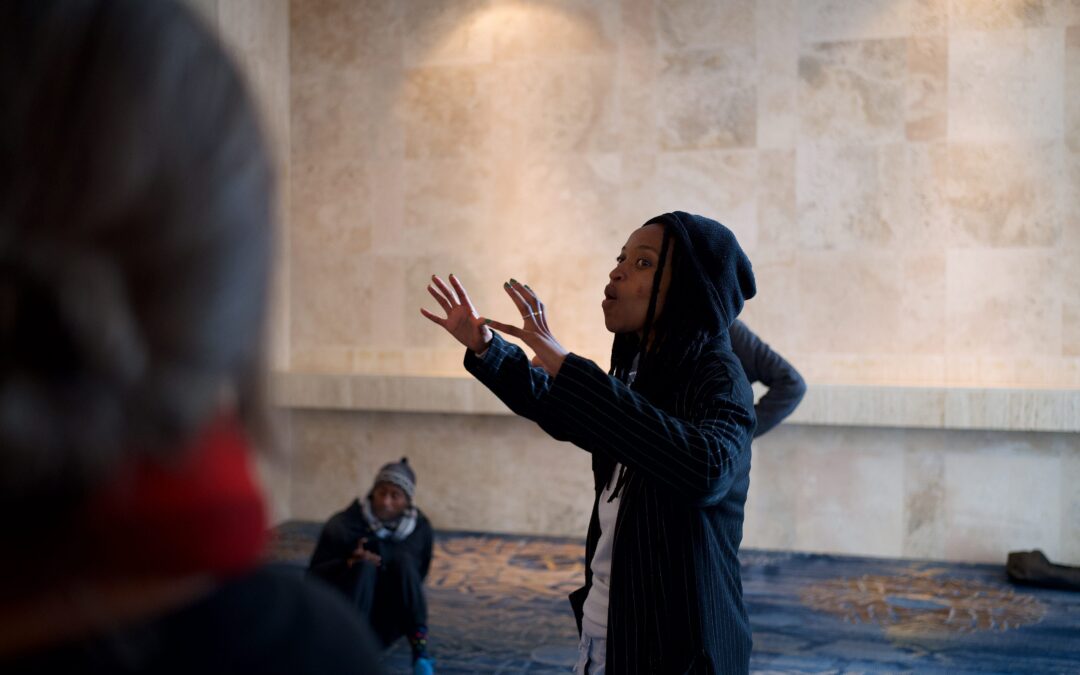
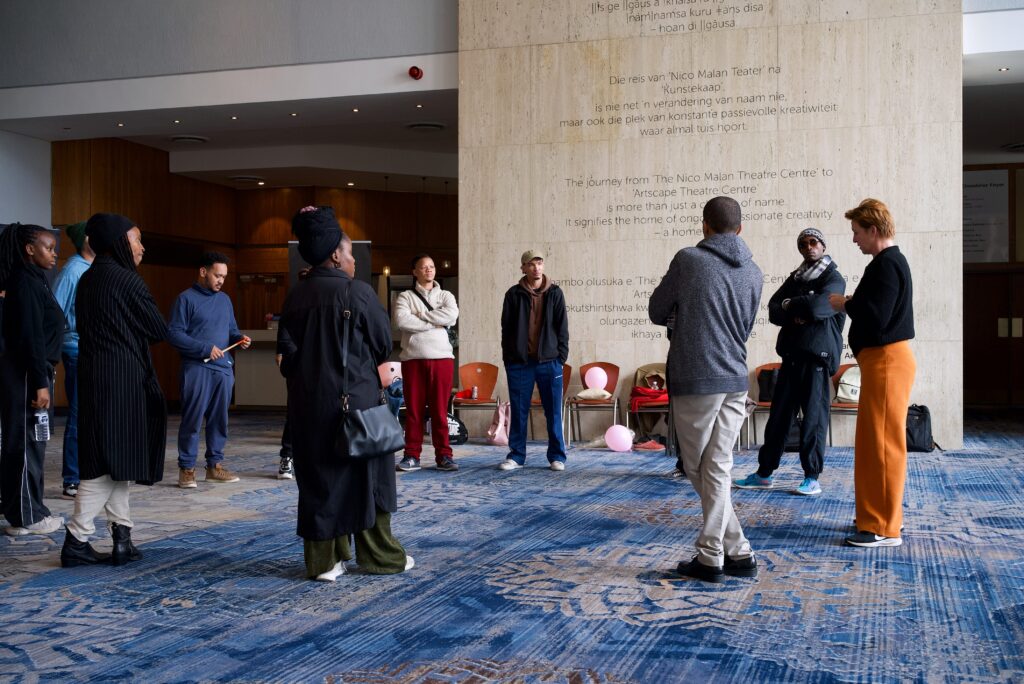
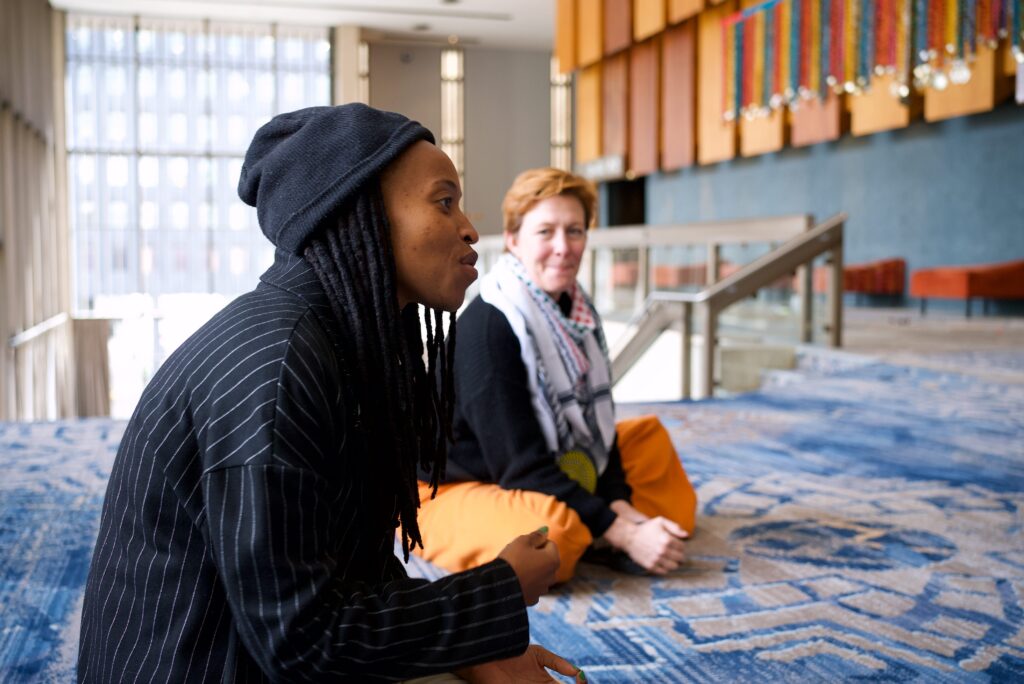
A recent workshop focusing on Live Art/Performance Art was conducted by artists Carin Bester and Qondiswa James at the Artscape Theatre in July. The workshop invitation was put out via an open call, organised via the Suidoosterfees with the support of the Festival Enterprise Catalyst and The Jobs Fund. What was unique about the workshop is that it was open to the public – which is quite rare. A group of fourteen interested members of the public attended, made up of inexperienced and experienced creatives.
The workshop was conducted over two days. The first day was grounded in theory followed by some practical exercises, and the second day fully practical. In her opening lesson, Bester first introduced the topic and made the important distinction between Performance Art and Performing Arts. The latter being associated with traditional theatre, and the former with more Live Art performance – something which had confused some in the group.
She did an excellent job of weaving in various historic elements covering topics including: History of Performance Art; Performance Art vs Live Art, Performance Art in South Africa, Performance Art Styles and notable artists.
Though Live Art may have formed in Europe and the U.S earlier, South Africans have been delivering powerful work for many years – the works of Dean Hutton, Sethembile Msezane and Donna Kukama were highlighted as important local artists.
The fun really began when the group was prompted to work on image-making by creating an image collage of “their thing” or whatever is important to them. This was cut out of magazines, which they first presented. This progressed into finding a body stance or position or representing that image, which they presented. The final stages were adding transitions to those and then working in groups. So each step built onto the next.
“Strong performance art understands image work,” Bester said. There was a lot of enthusiasm from the group, who put their creative juices to work. Just in the first day alone, strong themes of identity, indigenous roots, Afrikaner nationalism, gender inequality, and language emerged. There were powerful and vulnerable moments, even amidst the playfulness of it all.
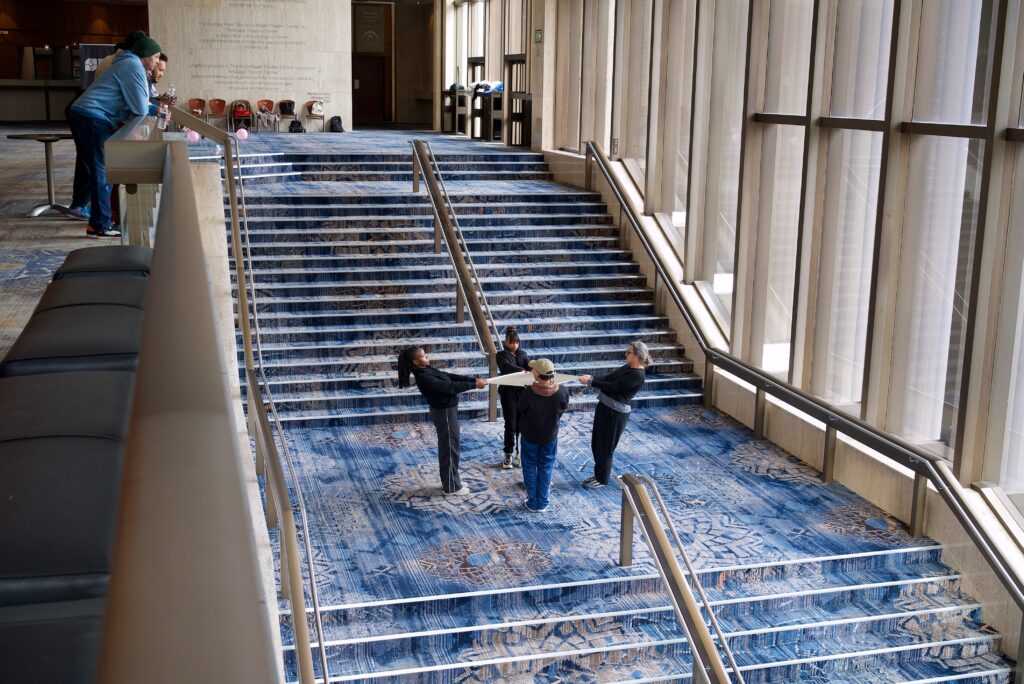
On the second day, there were first body warm ups done to connect to the physical body. Each member was asked to bring an object which led to a similar process of image-making. This became the building block to the next step of working with using their body, placing an emphasis on progressions and transitions, The day ended in fuller longer performances, after which certificates were handed out.
“There were quite a few nice things that came out of that. Some people didn’t really know what to do with the objects. Other people really used it very creatively and beautifully. It was also a nice instance, because one of the people made a gasp sound with the movement. It was a nice opportunity to go ‘that is acting, you are acting the gasp instead of actually feeling a gasp’, Bester says this was a great teaching moment pointed out by James.
Often these types of workshops are accessible only to university or theatre students, so there was something very powerful in making it accessible to interested parties. Another important takeaway was how accessible to the public the format of live art is, in that it is often experimental, performed in public spaces, unfolds in real time and can change each time. It takes the format of anything from an installation to a ritual protest. Sometimes there is a participation from those who are watching, sometimes it is durational. This open format, takes art out of the theatre halls and academic spaces and into the world, where it belongs.
Bester who has done a significant amount of work as a performance artist herself, says, “I think it went really, really well. They were all extremely excited and happy afterwards. When we went around at the end to see what everyone felt and how everyone was feeling, there was a lot of really positive reaction and excitement. You could tell that some of the people who were there were not initially knowing what performance art was, and not necessarily going to continue using it as a style. But they did learn a lot, and they really enjoyed it. There were some people who are really excited to go into the genre and to explore the genre more, which is quite exciting.”
Bester believes there is definitely a need for more of these types of workshops. As a pair, Bester and James work very well together in this workshop format and want to explore it more. They are very engaging, understanding and easy to work with as facilitators.
“We want to extend these workshops to do something longer, so that people actually get proper time to work on group activities, but also get time to work on individual projects that can then be durational. Even just up to an hour duration, so they can also get used to that. If you have to be doing this for an hour, what does it feel like? Even if no one is looking, and in the same breath, we were thinking about how we can also grow our knowledge of teaching by chatting to other people who’ve been in the industry as a lecturer or a teacher or someone who does workshops.”
“These are some of the ideas that came up for both of us in the continuation of sharing knowledge around live art and really pushing for the genre to have a proper, established footprint worldwide. Years from now, people must be like, ‘if you’re going to look somewhere for live art, look to South Africa’.”
Even today, it is uncommon to find many live art/performance art workshops. In a country enduring so much trauma, one way to battle and confront these experiences is the ability for anyone to be able to express themselves within this art form. And since art education for those based within township spaces is often extremely limited, this level of accessibility to learn but also have exposure to work with experienced artists, is extremely important.