Pursuing a career as a musician in South Africa has become one of the most challenging creative professions to pursue. Unless you’re belting out the latest amapiano bangers, or surviving playing corporate gigs, working as an independent musician is nearly impossible. Compared to visual arts or film, there are only a handful of artists who can claim to be full-time musicians in the country – no matter how talented you are.
The business of music has changed. Just a few years back, there were booking agents, labels, venues and concert promoters. There were growing scenes; gig guides, reviews of performances in the newspaper. But now, if an artist wants to tour in South Africa, they are spend money to work – a process that is completely counter-intuitive. This has led to a lack of inter-city touring of bands, just in South Africa alone.
This is why the Mobility Subsidies announced by Concerts SA – a live music support initiative – in July is so important. It awarded 50 artists subsidies which will enable 50 music tours immediately across South Africa and the Southern African Development Community (SADC) region between July and October 2025. This comes as the result of the Festival Enterprise Catalyst (FEC) programme, a Jobs Fund supported initiative that supports sustained work in the creative sector. The total amount granted is R45 000 per artist.
I asked four recipients a few questions including: How this fund helps them? What is needed for a tour? And why the fund is important.
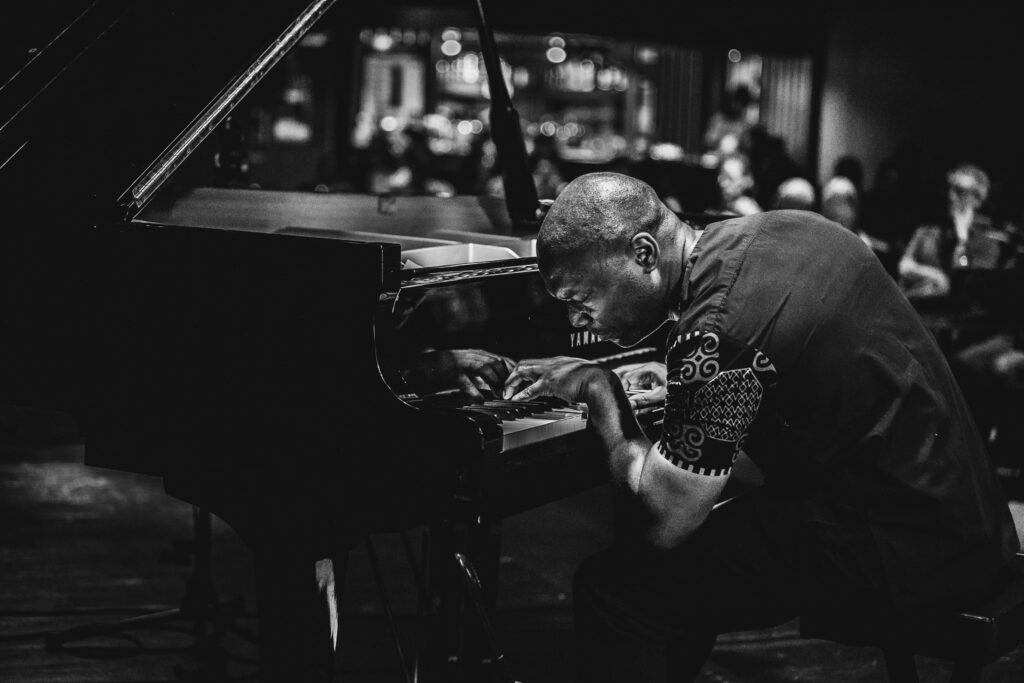
The Concerts SA mobility grant is quite evidently helpful as it has stimulated the local and SADC touring circuit. This was an integral part of what Babu envisioned back in 2008. We approached the Norwegian organisation Mmino, with a proposal centred around stimulating a local touring circuit, along with a workshop element aimed at exposing young students of music to a high level of musical practice.
Tours of this sort are simply not possible without some source of funding. Most jazz musicians cannot afford to fund this on their own. In the absence of adequate state sponsored initiatives, organisations like Concerts SA are essential and form a vital part of the music scene.
Tours firstly require a musical concept and an ensemble; then there are basically travel, accommodation, marketing, venue, sound, and logistical costs and that is where funding is so important. It also helps that the funding contributes to artist fees since door takings are usually insufficient.
This should become a model for more such initiatives. I would propose that a next critical stage in the development of the South African music scene would be to find sustainable sources of funding that can support a handful of musically centred venues. By this I mean venues that prioritise music, sound, the artists, and the experience of the audience.
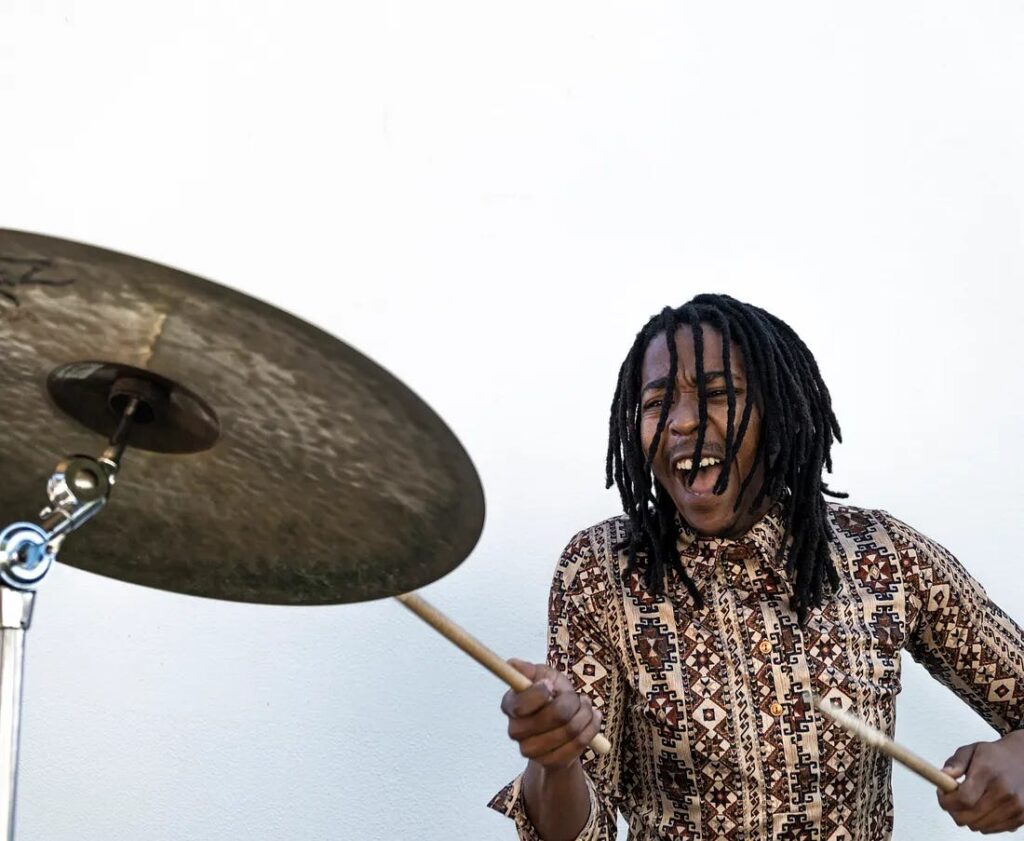
The fund is important to help artists mobilize their music, and especially with venue costs; equipment hire; marketing; the admin of getting the band to a place; transport and accommodation. Those types of things are generally what we struggle with as artists when it comes to tours.
We have big dreams of going to play in Durban and in Joburg and Botswana for example, but it’s very hard because of the funding. As a drummer, I’m almost always hiring a drum kit. Before we even go on tour, we need these few cents to be in order, or someone to have our back. When I play in Joburg, I reach out to a friend who can host me, but it gets harder when you’re moving a whole band and you’re trying to do that.
We have big dreams and big hopes, but money is always short. What usually happens at the end of the tour is that I am back in Cape Town having incurred a loss and not a profit. That has been the situation for some of the tours I’ve done, especially when starting out as an artist, not knowing people and not having the financial grounding.It generally is a struggle getting off the ground. That has been a way that these types of funds really help young and up and coming artists – they have the ideas, but it’s just hard to execute.
I got this funding before…I’m hoping that this time I can do a bit more. I’m super grateful for having these types of opportunities where funding is available for new ideas and for artists to do their thing.
Travelling to places where people need and appreciate my music has often been a struggle. Usually, the door takings only cover the basic costs and this is mostly just enough to pay the musicians. But a proper tour requires so much more: transport, accommodation, sound equipment, venue hire, marketing, rehearsals, and fair artist fees. Often we have to cut corners, or leave certain things out altogether.
The Concerts SA Mobility Fund allows me to plan with intention and to reach more communities, to tour, and to present the music with care. It also gives me a chance to start saving towards recording and documenting my next album.
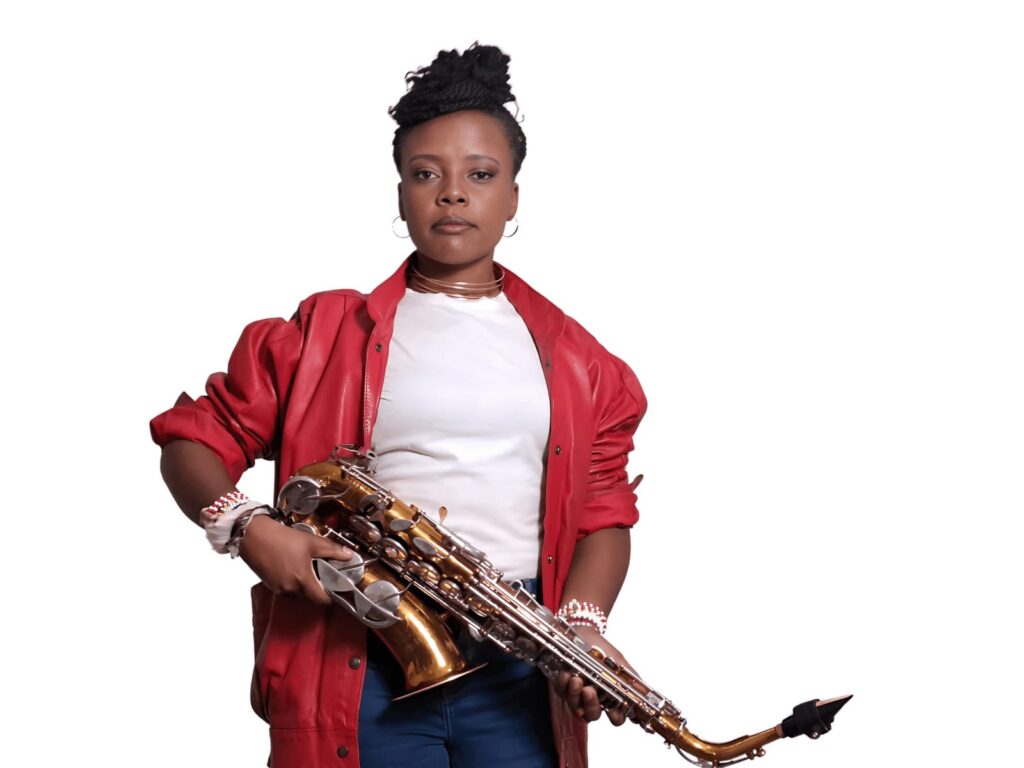
The Mobility fund is really a great help for me, because I wouldn’t otherwise be able to cover the costs of putting a tour together, no matter how small, because I have to cover things like rehearsal fees, transport and lunch.
It also helps with subsidizing payments of the musicians, especially when it comes to the costs and fees. We can at least cover those without being stressed, because there’s a set fee. We can do the work and whatever else is received from the venue can subsidize that, plus with the money from the mobility fund, cover payments needed for the musicians.
To be able to tour in different cities or provinces helps my reach as an artist, because I can go to where my listeners are. I just came back from Durban yesterday and lo and behold, I didn’t know that there were people who knew my music there or who were following my career! People were there singing along to the music. How would I have been able to reach those people when I don’t have the funds?
Even if you save up, it won’t be enough for you to be able to cover everything. When I travel to Durban, I have to cover my transport cost, accommodation, per diem and rehearsal cost because I can’t essentially travel with my band from Jo’burg.
But at the same time, if you always travel with your band, you never get to interact with other musicians – and music and life is about that, because we are interactive beings. We need to have that human touch; that human engagement. It’s nice to get to a place and get to know the musicians from around. You make new friends that you can work with in the future. It grows our community.
I really appreciate it for that, because it’s not just about the money, but it’s also about the relationships formed and so much more that we can’t see but we get to experience.
That being said, as working musicians, who solely rely on performance for our livelihood it would help us if the fund would be added on as per inflation rates to assist us in having the money stretch as far as possible to meet the financial demands of a tour.
The desperate need for funds the industry showed when the call for applications drew over 800 expressions of interest from across the country, with submissions received from established and emerging music professionals representing a diverse array of genres and backgrounds.
Concerts SA has been running music mobility funds since 2013. From then till 2023, they facilitated over 3,800 concerts generating work opportunities for over 27,000 music professionals. The Covid19 pandemic interrupted the program which pivoted to the Digital Mobility Fund. But now that artists can freely travel again, Concerts SA restarted the programme in 2024.
James French of Concerts SA says, “Each tour selected by an independent adjudication panel is subsidised with an amount of R45 000. The recipient can distribute the funds on tour related expenses as they see fit, though Concerts SA prefers for musician’s performance fees and transport costs to be prioritised. These costs vary from tour to tour.”
“We’re thrilled at the response,” said Andre Le Roux, Concerts SA Project Leader. “This is the strongest signal yet that the live music sector is roaring back to life. The eagerness to tour reflects artists’ deep desire to connect with audiences and expand their reach—and we’re honoured to support that journey.”