A lively discussion held on the opening day of Suidoosterfees in Cape Town (29 April 2026) brought into sharp focus the urgent need to rethink how the arts are funded in South Africa.
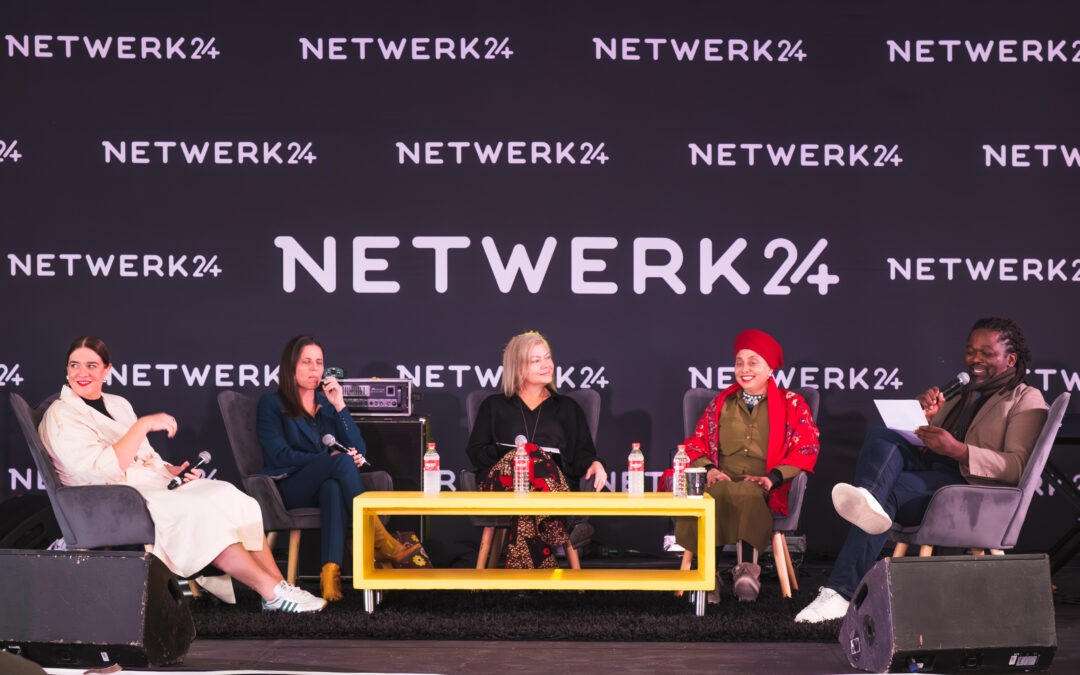
The panel discussion, The Future of Arts Funding: Sustainability, Innovation and Collaboration, gathered key voices from across the cultural sector, including Cornelia Faasen (CEO of NATi), writer Dominique Endhoven, Beth Arendse (CEO of Business and Art South Africa) and Marlene le Roux (CEO of Artscape), with broadcaster Africa Melane moderating.
What emerged was a shared recognition that the current funding model is no longer sufficient and new thinking is overdue. BASA CEO, Beth Arendse, framed the challenge directly, describing arts funding as being in crisis—not necessarily due to a lack of money, but because old funding models are no longer a fit. “There is capital,” she noted, “but the value of the arts is not clear to investors. We keep leading with need, rather than designing models that unlock value. The creative economy contributes 1.4 million jobs and 4% of GDP, yet is left out of most investment conversations. Investors are just not seeing it.”
The panel agreed that while artists are central to the ecosystem, it should fall to intermediaries and cultural stakeholders to build the frameworks that make sustainable funding possible allowing artists to just be able to create work. Dominique Endhoven emphasised that artists themselves are not lacking in capability. “Artists know how to create jobs, we shouldn’t leave that to government” she said. “Instead artists need to be enabled—and that’s where government comes in.” She also pointed to the broader national value of the arts, describing creative products as a “calling card” for South Africa. “We have so much excellence. We need to surface it and showcase it to the world.”
NATi’s Cornelia Faasen reinforced the idea that while the arts sector continues to function it’s been driven largely by passion. She pointed out that it could be significantly strengthened through more coordinated government and private sector support. She highlighted the potential of inter-ministerial collaboration, particularly between trade and industry, tourism and innovation. “That kind of alignment could supercharge the sector and unlock significant job creation,” she said.
At the same time, Faasen cautioned that new regulatory frameworks, while welcome in principle, could place additional burdens on artists. She called for greater social protections, including pension schemes and medical aid support, noting the lack of a safety net for many practitioners.
Sustainability, labour, and education
The question of sustainability ran throughout the discussion. Faasen pointed to the Festival Enterprise Catalyst project as one example of a more resilient model, using match funding in partnership with the Jobs Fund to enable productions to travel across a network of partners—extending the lifespan of work and creating more stable income opportunities for artists. The project partners include KKNK, National Arts Festival, Suidoosterfees, Toyota Woordfees, Aarklop, SAMRO, Concerts SA, NATi and Tribuo.
The Artscape’s CEO, Marlene le Roux, highlighted another challenge: the administrative burden attached to government funding. She said that compliance processes can be arduous and a burden on capacity. She called for streamlined systems that better support artists and organisations. She also stressed the importance of labour organisation within the sector, encouraging artists to unionise and organise themselves especially in light of new regulations.
A call to action
The panel concluded with a strong consensus: partnership is essential between artists, intermediaries, government and business. In a pointed challenge, moderator Africa Melane called for a formal motion to engage Operation Vulindlela in the Presidency to address systemic and infrastructural issues in the creative economy at a national level to truly unlock the jobs and cultural currency that lies within the sector. Closing the session, actress Kim Engelbrecht stepped up to the podium to reflect on the role of festivals in sustaining the sector. Her production A Woman Alone, currently part of Suidoosterfees and partially funded through the FEC model, stands as a practical example of what new funding approaches can enable. “Festivals are the infrastructure of the industry,” she said, “supporting the arts is an investment in our culture and our future.”