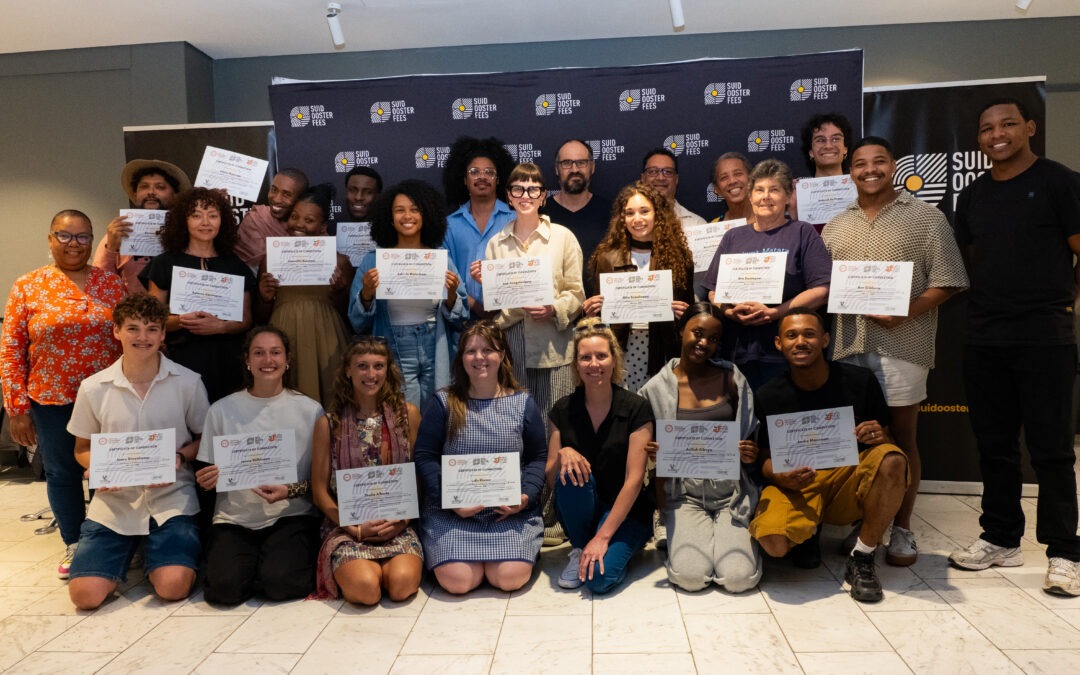
The Introduction to Production Management workshop, presented by Marié Vogts, at the Artscape was a FEC skills development session that offered a rich and highly practical exploration of what it truly means to manage a theatre or dance production from conception to final strike. Drawing on her extensive experience as Producer and Production Manager for Figure of 8 Dance Theatre, Vogts delivered an energetic, insightful session that blended theory, lived experience and industry wisdom.
Vogts opened the workshop by clarifying the core distinctions between key production roles—Producer, Production Manager and Stage Manager. This framing immediately grounded participants in the ecosystem of theatre-making, highlighting the PM’s unique position as both the logistical backbone and the guardian of practical feasibility within the artistic process. Her comparison between the Producer’s high-level strategic work and the PM’s hands-on operational duties helped demystify an often misunderstood role.
A central portion of the workshop focused on the personality traits that make for an effective Production Manager. Vogts presented this with wit and honesty—from the “closet admin addict” who thrives on spreadsheets to the calm, diplomatic problem-solver who can navigate crises without ego. She made it clear that the role demands resilience, adaptability and emotional intelligence, as PMs frequently mediate between creative vision, technical constraints, budget realities and human complexities. Equally valuable was her frank discussion on who shouldn’t pursue PM work, emphasising the need for comfort with conflict, multitasking and constant change.
The session also provided a detailed breakdown of the PM’s practical responsibilities across the full production timeline. Participants were guided through pre-production essentials such as developing budgets, sourcing suppliers, securing venues, ensuring legal compliance, preparing marketing materials and coordinating schedules. Vogts stressed the importance of realistic planning, buffer time and early communication to avoid the kinds of emergencies that frequently arise in rehearsal and technical periods.
During the exploration of rehearsal, technical week and performance phases, Vogts shared numerous real-world examples that illustrated the PM’s role in managing stress, maintaining calm and ensuring safety while supporting artistic needs. Her reminders about checking projectors, watching cables and preparing for inevitable last-minute changes were both relatable and instructive.
The workshop also addressed post-production tasks—budget reconciliation, storage logistics, strike coordination and documentation—underscoring that a production is not truly complete until every element has been safely wrapped and fully recorded.
Vogts placed significant emphasis on people management, which emerged as one of the workshop’s strongest themes. She discussed communication strategies, delegation, cultural sensitivity, conflict resolution and the value of building collaborative relationships. Her insights into working with different types of directors—visionaries, text-driven creatives, technical thinkers, dreamers—were particularly engaging and offered participants nuanced tools for navigating diverse artistic personalities.
The workshop concluded with an overview of key industry systems and structures, including funding bodies (governmental, corporate, festival-based), essential documentation, reporting requirements and a comprehensive map of South African theatres and festivals. Vogts encouraged participants to approach the industry with curiosity, professionalism and ongoing learning, reinforcing that strong Production Managers are always in demand. Above all, she reminded participants of a crucial truth: production management is demanding—but deeply rewarding for those who thrive on structure, teamwork, creativity – and controlled chaos.